Research at AMC-Lahti
One problem, three disciplines.
The atmosphere is measured at a few thousand scattered stations, but the questions we have to answer — what is in the air, where it came from, what it will do next — need answers everywhere, every hour, for every pollutant. Closing that gap, from sparse and noisy data to a complete and physically consistent picture, is the single problem that our atmospheric scientists, applied mathematicians and machine-learning researchers work on together.
Why these three belong together
Our co-leader, Michael Boy, holds a chair in both atmospheric science and applied mathematics — which is the centre in miniature. The same prediction problem is attacked from three sides, and the sides depend on each other.
Atmospheric science
Builds the mechanistic understanding and the process models — which reactions turn gases into particles, how the boundary layer moves them.
Mathematics
Formalises “recover the cause from limited measurements” as an inverse problem, and quantifies how much the answer can be trusted.
Machine learning
Makes those models fast enough and fine-grained enough to run at city-block resolution across a whole continent.
01 — Atmospheric chemistry & air quality
How do invisible precursor gases become the particles we breathe — and where does a city’s pollution actually come from?
How we work
The centre develops SOSAA, a one-dimensional process model that couples boundary-layer meteorology, gas-phase chemistry and aerosol dynamics. It follows biogenic volatile organic compounds through oxidation all the way to new-particle formation, and recent work pushes automated autoxidation chemistry directly into the model. Coupled with the FLEXPART trajectory model, SOSAA traces measured pollution back along the wind to its sources.
What it produced
- A Lagrangian reconstruction of severe Beijing haze that separates local emissions from long-range transport. Atmospheric Environment, 2025.
- Ozone source apportionment and an associated health-risk assessment for eastern China. Environment International, 2026.
- A contribution to a Science study showing that urban secondary organic aerosol forms a distinct chemical regime. Science, 2025.
Researchers in this area

Michael Boy
Co-leader of AMC-Lahti
Atmospheric chemistry · Aerosol dynamics

Mikko Äijälä
Associate Professor
Aerosols · Mass spectrometry
Taiwo Ashu
Post-doc
Boundary layer · Urban pollution

Petri Clusius
Post-doc
SOSAA · FLEXPART
Valery Ashu
PhD Student
Neural networks · Autoxidation chemistry
Zeqi Cui
PhD Student
Air pollution data · Machine learning
Haitong Zhang
PhD Student
Atmospheric chemistry · Aerosols (China)

Ammar Kheder
PhD Student
Neural emulators · Air quality AI

Jenni Köykkä
PhD Student
Atmospheric modelling · Arctic transport
Robin Wollesen de Jonge
Post-doc
Marine aerosols · New particle formation

Zihao Fu
Post-doc
Quantum chemistry · Autoxidation
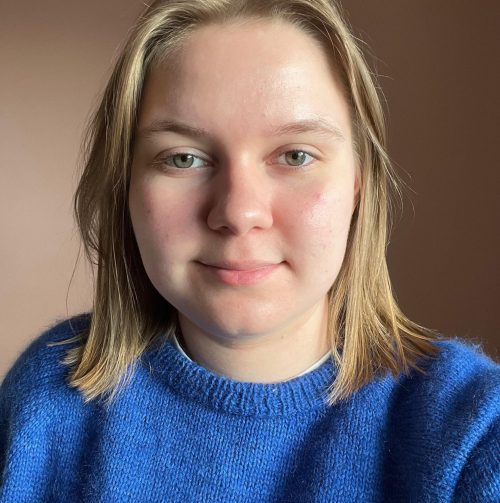
Helmi Toropainen
PhD Student
Generative AI · Climate downscaling
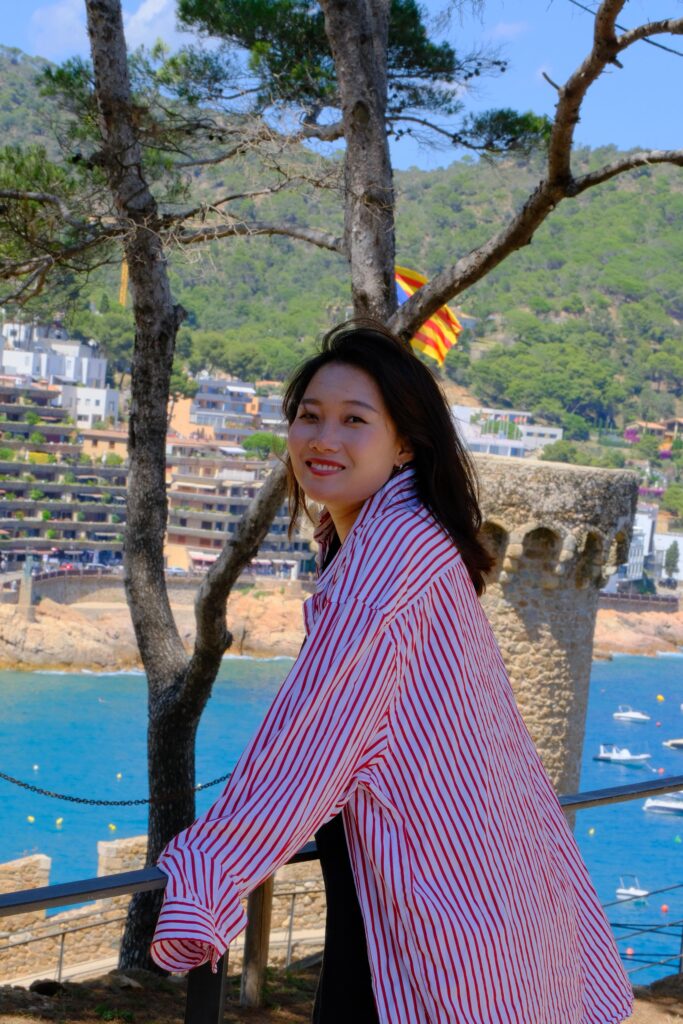
Xiang Li
PhD Student
Aerosol size distributions · Air quality

Metin Baykara
Visiting Researcher
Particulate matter · CTM modelling
02 — Mathematics of inverse problems
Can you recover the cause from incomplete, noisy measurements — and prove how far the answer can be trusted?
How we work
Bayesian inversion and Markov-chain Monte Carlo sampling turn an ill-posed problem into a probability distribution, so an estimate always comes with quantified uncertainty (Haario). Wave-scattering theory establishes when — and how — a medium can be reconstructed from boundary data (Blåsten). Industrial computational fluid dynamics with shape and control optimization (Hämäläinen) and discrete-element modelling of granular flow (Dubey) carry the same recover-from-data thinking into flows and transport.
What it produced
- A method to recover a (1+1)-dimensional wave equation from a single white-noise boundary measurement — about the least data a reconstruction can use. Inverse Problems, 2026.
- A statistical comparison of reconstruction methods for the one-dimensional inverse wave problem, benchmarking what actually works on imperfect data. Agenorwoth & Blåsten, 2026.
Researchers in this area
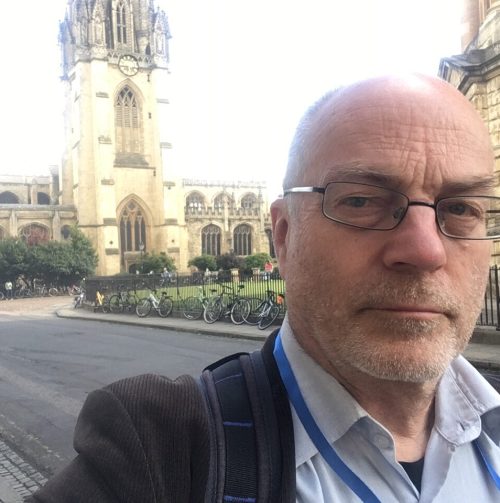
Heikki Haario
Professor
Inverse problems · Bayesian methods

Jari Hämäläinen
Professor
Industrial CFD · Environmental flows
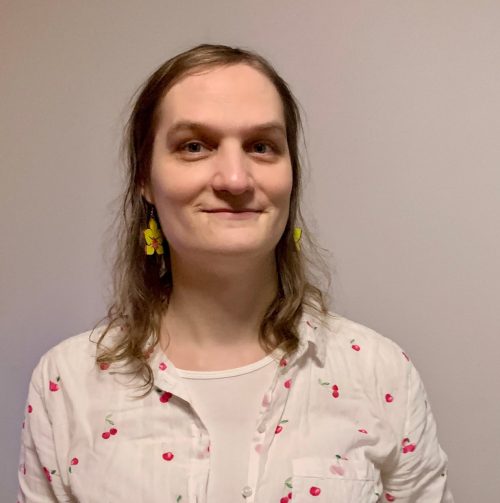
Emilia Blåsten
Associate Professor
Wave scattering · Inverse problems
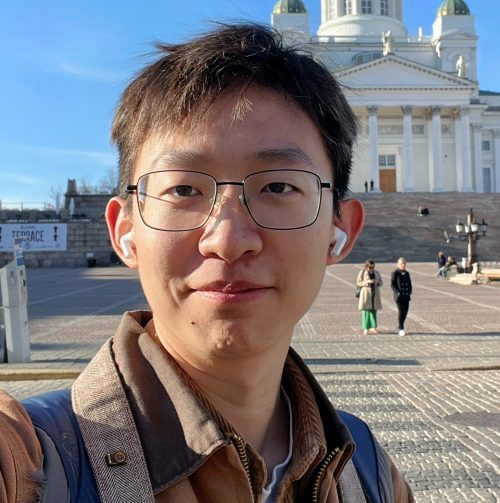
Wenqing Peng
PhD Student
Deep learning · Inverse modelling
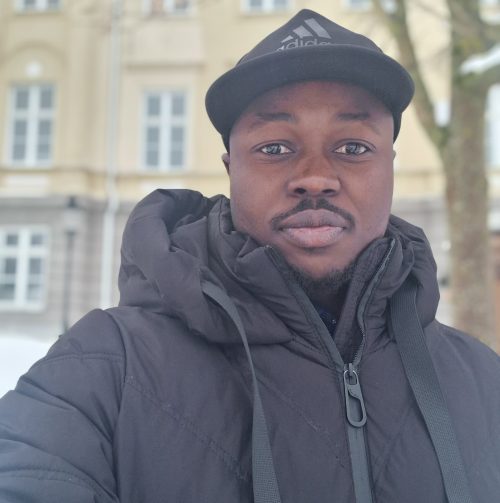
Samuel Agenorwoth
PhD Student
Inverse Problems · Wave scattering
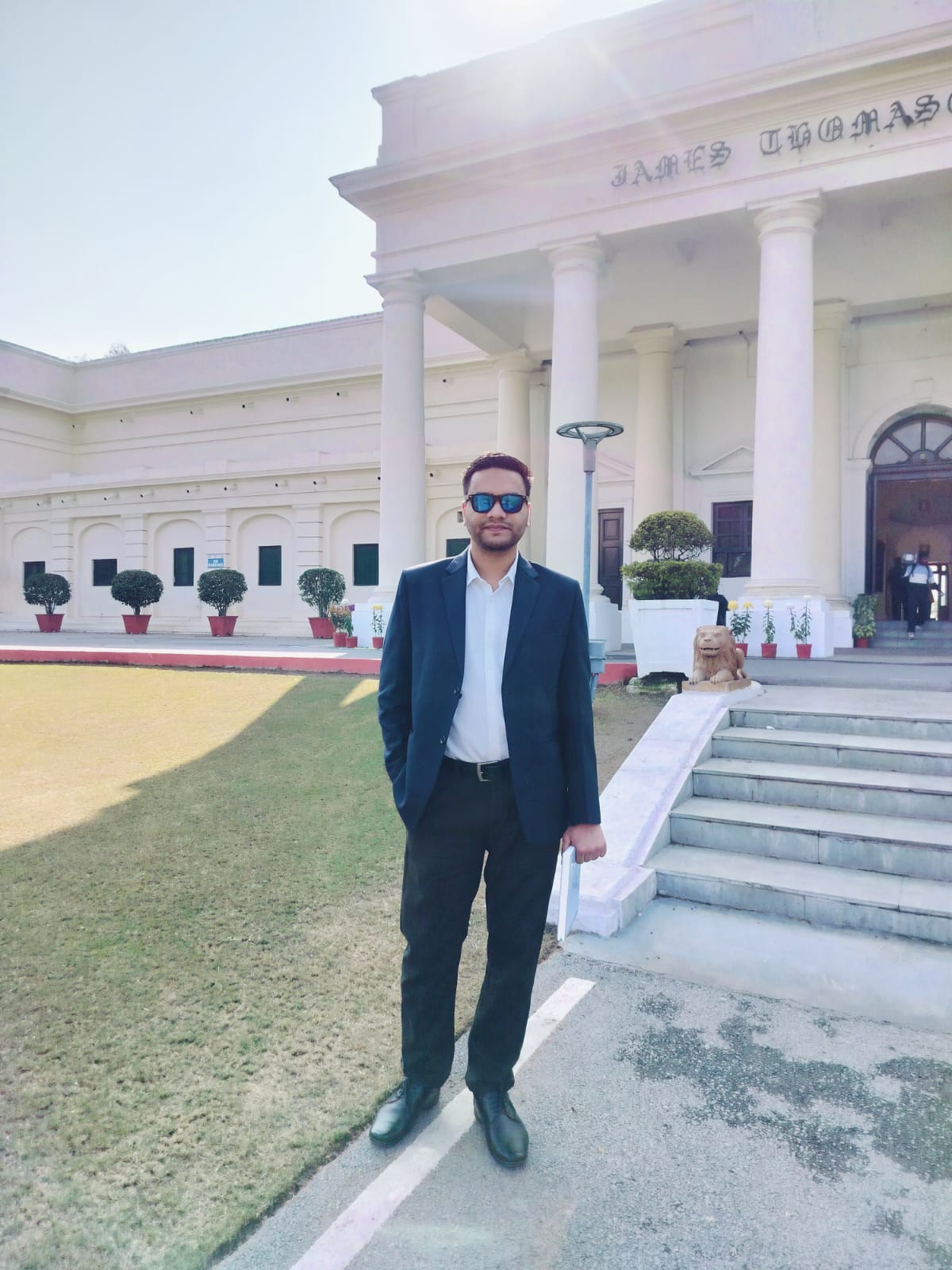
Praveen Dubey
Post-doc
Granular flow · DEM simulations
03 — Machine learning for atmospheric prediction
Can a network do in seconds what a stiff chemistry solver — or a supercomputer — needs hours for, and at higher resolution?
How we work
Attention-based neural-ODE emulators (ChemNNE, SPIN-ODE) replace the stiff chemistry solvers buried inside atmospheric models. Cross-resolution and topography-aware vision transformers (CRAN-PM, TopoFlow) fuse coarse global meteorology with fine local data to predict pollution at one-kilometre scale. Diffusion-based generative models super-resolve climate fields where deterministic downscaling plateaus (Toropainen).
TopoFlow
A PM2.5 RMSE of 9.71 µg/m³: about 13% better than the strongest AI baseline and 71–80% better than operational forecasts, holding across four pollutants and 12–96 h lead times.
arXiv 2602.16821
CRAN-PM
Generates a 29-million-pixel, 1 km European air-quality map in 1.8 s on a single GPU, cutting RMSE 4.7% at +1 h and 10.7% at +3 h versus the best single-scale baseline.
arXiv 2603.11725
Researchers in this area
Michael Boy
Co-leader of AMC-Lahti
Atmospheric chemistry · Aerosol dynamics
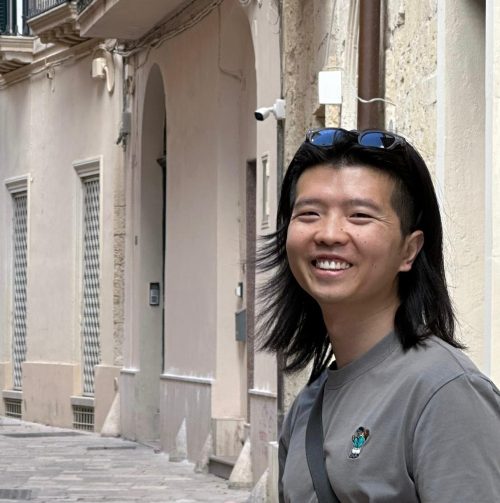
Zhi-Song Liu
Co-leader of AMC-Lahti
AI for chemistry · Computer vision
Mikko Äijälä
Associate Professor
Aerosols · Mass spectrometry
Valery Ashu
PhD Student
Neural networks · Autoxidation chemistry
Zeqi Cui
PhD Student
Air pollution data · Machine learning
Wenqing Peng
PhD Student
Deep learning · Inverse modelling
Ammar Kheder
PhD Student
Neural emulators · Air quality AI
Helmi Toropainen
PhD Student
Generative AI · Climate downscaling
Praveen Dubey
Post-doc
Granular flow · DEM simulations
Beyond these themes
Researchers whose work bridges or extends the three areas above.
Selected recent work
All 29+ publications →2026
Atmospheric Oxidation and Toxicity Evolution of Chlorobenzotrifluoride from Solvent-Based Paints: Implications for Environmental and Health Risk Assessment
Fu · Environment & Health
2026
Shift in Aromatic Acids From Primary Emissions to Secondary Formation During Air Quality Improvement in the Pearl River Delta
He · Journal of Geophysical Research: Atmospheres
2026
An advanced modelling study on the role of dimethyl sulfide in new particle formation in the pristine marine boundary layer
Wollesen de Jonge · Atmospheric Chemistry and Physics
2026
Attention-Enhanced CNN Surrogate for Inverse Parameter Estimation in Cellular Automata
Ashu · Computational Methods in Applied Sciences
2026
Drivers of ozone episodes during clean and polluted days in eastern China: Insights into precursor characterization, source apportionment, and associated health risks
Zhang · Environment International
2026
Statistical comparison of reconstruction methods for the inverse boundary problem of the one-dimensional wave equation
Agenorwoth · arXiv preprint (math.NA)